Three-Card Poker Twists for Cooperative School Fundraisers with Shared Winnings and Simplified Scoring
Erik Zimmermann · Aug 25, 2026
Three-Card Poker Twists for Cooperative School Fundraisers with Shared Winnings and Simplified Scoring
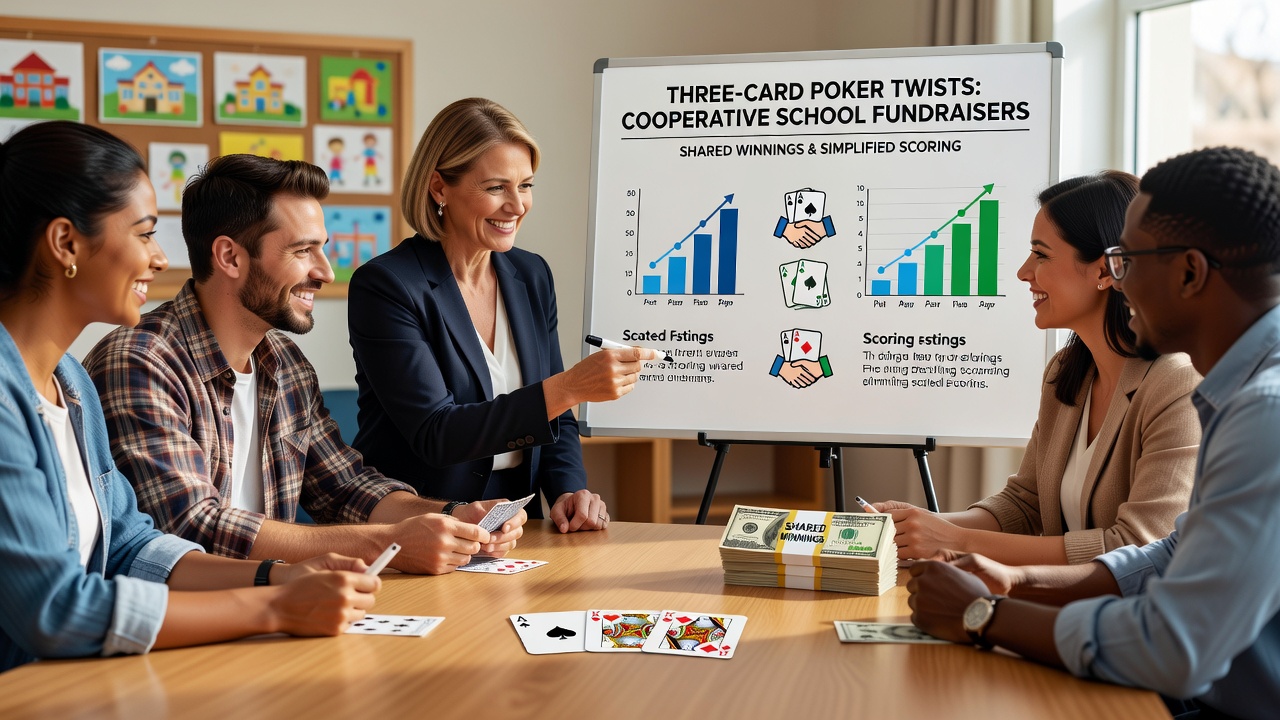
Schools continue to adapt three-card poker for cooperative fundraisers by introducing twists that emphasize teamwork, shared winnings, and streamlined scoring systems that reduce complexity while preserving engagement. These modifications allow larger groups to participate without requiring advanced poker knowledge, and they align with educational goals around collaboration and financial literacy. Observers note that such events often occur during back-to-school seasons, including activities planned for August 2026 when many districts launch annual giving campaigns.
Core Mechanics of Three-Card Poker in Group Settings
Three-card poker traditionally involves players receiving three cards and making ante bets before comparing hands against a dealer or fixed payout table, yet fundraiser versions replace the dealer with community pools that distribute proceeds among participants. Research from gaming studies indicates that simplified hand rankings, such as focusing only on pairs, straights, and flushes, speed up rounds and accommodate younger players alongside adults. Data shows these adjustments maintain the game's pace while cutting setup time by nearly half compared to standard casino formats.
Cooperative Twists That Shift Focus from Competition to Collaboration
Organizers introduce cooperative elements by grouping players into teams that collectively decide on bets and share outcomes, which turns individual risk into group strategy. One common variant requires teams to pool ante contributions into a central pot that grows with each successful round, and winnings then split evenly among team members at the end of the evening. This approach encourages discussion and decision-making skills, while figures from community event reports reveal higher retention rates when participants feel invested in collective success rather than solo victories.
Simplified Scoring Systems for Accessibility
Simplified scoring replaces complex payout pyramids with tiered multipliers based on hand strength alone, so a pair pays a flat 1-to-1 return and a straight or better triggers a 3-to-1 community bonus that feeds the shared fund. Schools often use color-coded cards or digital apps to track these outcomes instantly, which reduces disputes and lets volunteers focus on supervision. According to industry analyses from the American Gaming Association, these streamlined tables increase throughput and allow more hands per hour, boosting total donations without extending event duration.
Shared Winnings Models That Maximize Participation
Shared winnings structures allocate a percentage of every pot to a central scholarship fund while the remainder distributes among active teams based on participation points rather than final hand rankings. This method ensures even players with modest hands contribute to the overall goal, and it aligns with nonprofit guidelines that prioritize broad donor engagement. Reports from the National Council of Nonprofits highlight how these models have supported school programs in multiple states by converting game proceeds into direct educational resources.
Practical Setup for School Events
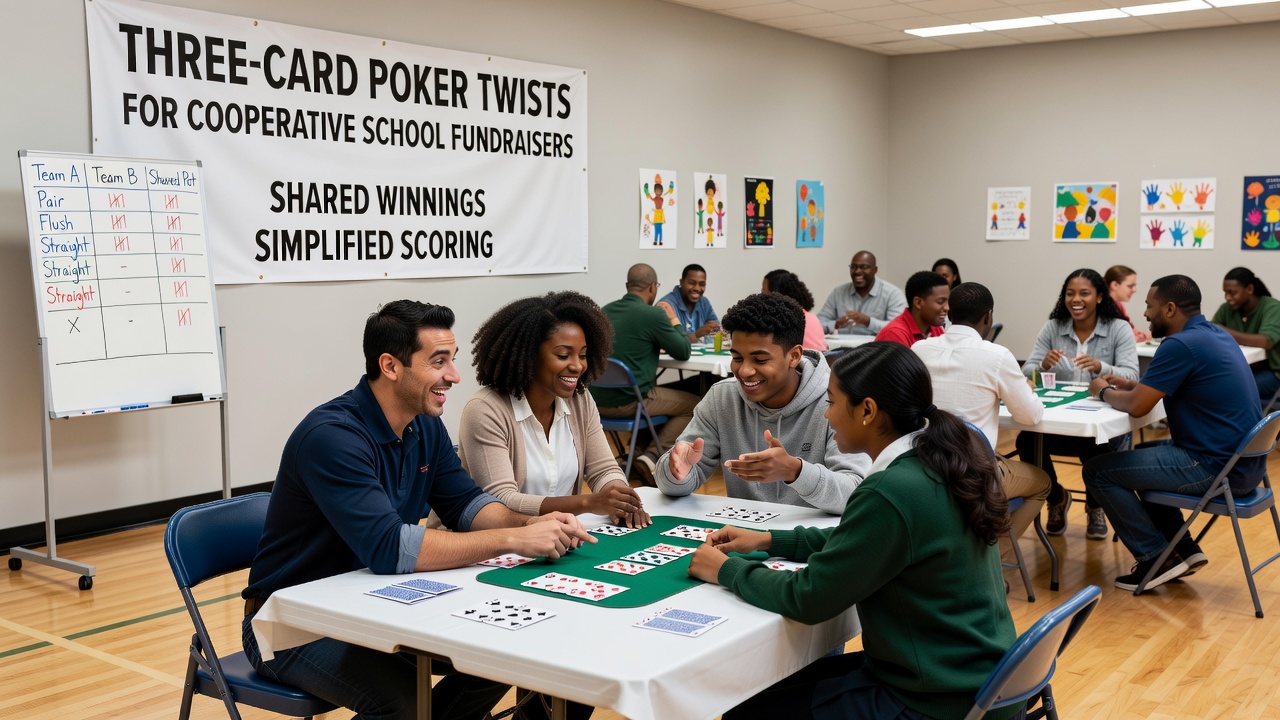
Event planners arrange tables in classroom or gymnasium spaces with pre-printed score sheets that list only five hand categories, and they provide volunteer dealers who rotate every twenty minutes to keep energy high. Materials include standard decks plus a communal chip tray that tracks team contributions, while signage explains the cooperative rules in plain language so newcomers join quickly. Data from recent fundraiser compilations shows that events incorporating these elements raised between fifteen and twenty-five percent more than traditional raffle formats during comparable time frames.
Examples from Recent Community Gatherings
One midwestern elementary school adapted the format last spring by forming grade-level teams that competed for a shared class prize while all proceeds benefited the library, and the event concluded with a simple ceremony that awarded both team bonuses and group donations. Another instance in a Pacific Northwest district used motion-sensor lights on tables to highlight active rounds, which helped parents track progress without constant supervision. These cases demonstrate how minor technical additions integrate with the core cooperative framework.
Trends Observed Entering August 2026
School districts entering the 2026-2027 academic year have begun incorporating digital scorekeeping apps that automatically calculate shared winnings and display real-time totals on classroom screens, which adds transparency and excitement. Regulatory updates in several states continue to support low-stakes charitable gaming when proceeds stay within educational institutions, and attendance figures reveal steady growth in family-oriented poker variants that emphasize inclusion over high-stakes play.
Conclusion
Three-card poker twists centered on cooperation, shared winnings, and simplified scoring provide schools with adaptable tools for successful fundraisers that engage diverse age groups and direct resources toward educational priorities. These methods build on established game structures while meeting community expectations for accessible, team-oriented events that deliver measurable results.