Exploring Dice Probability Patterns Through Modified Craps Sessions at Local Youth Centers for STEM Fundraising
Rafael Keller · Aug 18, 2026
Exploring Dice Probability Patterns Through Modified Craps Sessions at Local Youth Centers for STEM Fundraising
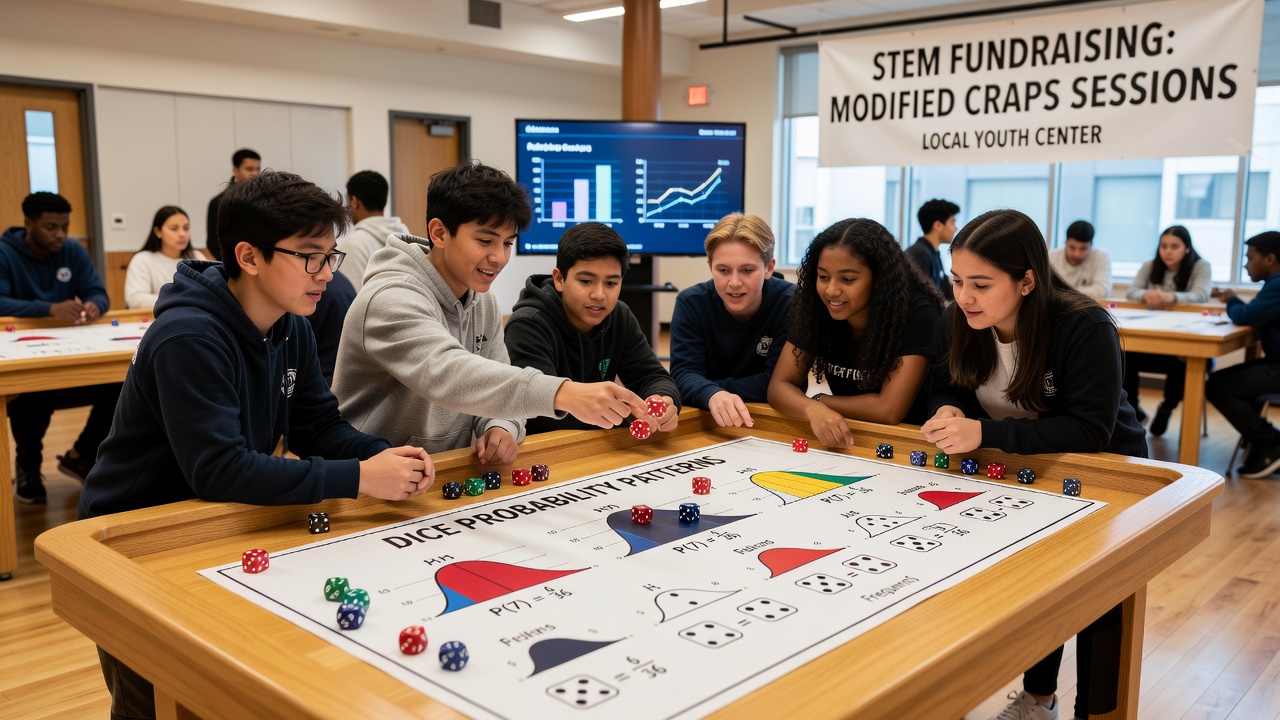
Youth centers across multiple regions have adapted elements of craps gameplay into structured sessions that highlight dice probability patterns while generating funds for science, technology, engineering and mathematics programs. These modified events replace traditional betting stakes with educational tracking sheets and group challenges that record frequency distributions from repeated rolls of standard six-sided dice. Participants calculate expected values for outcomes such as rolling a seven versus rolling a point number, then compare those predictions against tallied results collected over dozens of throws.
Core Mechanics of Modified Craps for Probability Instruction
Session leaders replace casino chips with numbered tokens that represent data points rather than currency, allowing groups to focus on statistical patterns instead of monetary risk. A typical round begins with the selection of a shooter who rolls two dice while teammates log each result on shared spreadsheets that automatically generate frequency tables and simple histograms. Observers note how the probability of rolling a seven remains fixed at six out of thirty-six possible combinations while the chances of establishing and making a point fluctuate according to the specific number chosen. This setup mirrors concepts covered in introductory statistics curricula yet occurs in an active, hands-on environment that keeps younger participants engaged for extended periods.
Data collected during these sessions often feeds into larger datasets compiled by partnering schools. In August 2026 several centers contributed aggregated roll logs to an open repository maintained by regional education networks, enabling cross-site comparisons of observed versus theoretical distributions. Researchers at participating institutions have examined these records to illustrate concepts such as the law of large numbers, where short sessions produce erratic results that stabilize only after hundreds of trials.
Fundraising Integration and Community Participation
Entry fees or small per-session donations cover material costs and contribute directly to STEM supply budgets at the hosting centers. Organizers set suggested contribution levels that remain accessible, while additional revenue comes from sales of printed probability guides and raffle drawings for donated educational kits. Local businesses sometimes sponsor specific tables by providing dice sets or software licenses for real-time graphing tools. The structure keeps the focus on learning outcomes rather than high-stakes play, aligning with guidelines from educational oversight bodies that emphasize age-appropriate content.
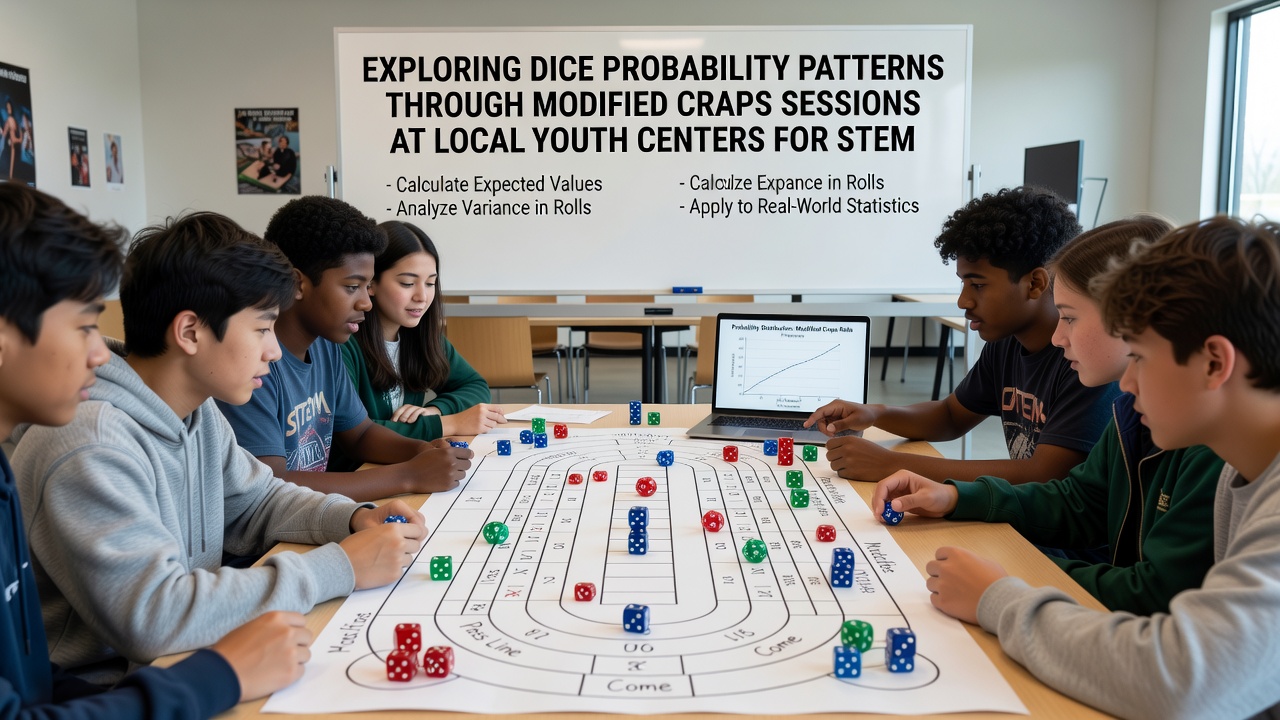
One documented program in the Pacific Northwest tracked participation across twelve weekly sessions and reported that repeat attendance correlated with measurable gains in students' ability to predict outcome frequencies without external aids. Another initiative in eastern Canada partnered with a provincial science outreach organization to incorporate sensor-equipped dice that transmitted roll data to tablets, allowing immediate visualization of probability curves. These adaptations demonstrate how core probability exercises scale across different facility sizes and technological resources.
Statistical Concepts Reinforced Through Repeated Play
Modified craps sessions naturally surface several foundational ideas in probability. The distinction between independent events and conditional probabilities becomes clear when participants attempt to calculate the likelihood of making a point after the come-out roll. Spreadsheets used during events automatically display running percentages that participants compare against theoretical values derived from combinatorial counting. Over multiple sessions, groups observe that certain point numbers appear less frequently in practice during short samples yet approach expected rates when data accumulates. Such observations provide concrete examples of concepts often presented abstractly in textbooks.
Centers sometimes extend the activity by introducing loaded dice or altered surfaces for controlled comparison trials, always under supervision to maintain fairness and safety standards. These controlled variations allow direct contrast between fair and biased outcomes, reinforcing lessons about experimental design and teh importance of documenting all variables. External reviewers from academic institutions have noted that such hands-on exposure helps bridge gaps between classroom theory and applied data collection.
Broader Educational and Regional Impact
Programs of this type align with recommendations from national science education frameworks that encourage integration of real-world data collection into middle and high school mathematics. Funding generated supports purchases of microscopes, coding kits and robotics components that extend beyond the probability sessions themselves. Regional education departments in several states have begun cataloging these events as supplemental enrichment activities eligible for modest grant matching. International counterparts, including programs coordinated through the Australian Council for Educational Research, have explored similar models that substitute culturally familiar games while preserving the same statistical core.
Conclusion
Modified craps sessions at youth centers continue to serve dual purposes of illustrating dice probability patterns and channeling proceeds toward STEM resources. The approach relies on transparent rules, documented data collection and age-appropriate safeguards that keep the emphasis on learning. Ongoing contributions to shared datasets in August 2026 and beyond suggest these activities will remain a practical bridge between recreational formats and structured educational outcomes.